What Changes on December 11 for US Hemp Rules?
Short answer: The federal change attracting attention is a tighter definition of hemp in Section 781 of Public Law 119-37, including a shift toward counting total THC rather than delta-9 THC alone and a 0.4 mg total-THC cap per container for covered hemp-derived cannabinoid products. But there is an important date correction: Public Law 119-37 was enacted on November 12, 2025, and Section 781’s changes are scheduled to take effect 365 days after enactment—November 12, 2026—not December 11, 2026. Anyone planning around a “December 11 hemp rules” deadline should confirm whether that date refers to a separate state rule, agency action, or company deadline.
This distinction matters for growers, processors, retailers, and consumers. The new language could substantially narrow which products qualify as hemp under federal law. Yet the exact impact depends on the product, how its cannabinoids are made, how much is in each container, and how regulators implement the statute. Here is what the law says, what it may mean in practice, and which paperwork businesses should be checking now.
First, check the date: what is the December 11 deadline?
The phrase “December 11 hemp rules” is circulating as shorthand for an approaching federal change. However, the effective-date provision in Section 781 of Public Law 119-37 sets the amendments to take effect 365 days after enactment. Because the law was enacted on November 12, 2025, the scheduled federal effective date is November 12, 2026.
That does not mean a December 11 date is irrelevant in every context. A state agency, retailer, platform, or supply-chain partner could set its own deadline, and regulations or guidance may create other dates businesses need to meet. But those should not be described as the effective date of Section 781 without a source establishing that connection.
Legal takeaway: Section 781’s federal effective date is November 12, 2026; treat December 11 as a separate deadline unless you can tie it to a specific law, agency notice, or contract.
What Section 781 changes
Section 781 of Public Law 119-37 amends the federal definition of hemp. The change is significant because the 2018 Farm Bill framework is widely associated with a delta-9 THC limit of no more than 0.3% on a dry-weight basis. The amended definition uses a more restrictive approach for certain hemp-derived cannabinoid products, including a limit of no more than 0.4 milligrams of total THC per container.
The new law also addresses the source and composition of cannabinoids. In broad terms, it excludes certain products with cannabinoids that are synthesized or manufactured outside the plant, and it places restrictions on products containing cannabinoids with intoxicating effects. The statute’s definitions and product categories matter: it is not safe to assume that every product currently marketed as “hemp” will be treated the same way.

Implementation details and agency guidance will affect how businesses apply the statutory language. Companies should read the enacted text and any subsequent official guidance rather than relying on a social media summary or a label claim.
From delta-9 THC to total THC: why the distinction matters
Delta-9 THC is one specific cannabinoid. THCA, or tetrahydrocannabinolic acid, is a different compound that can convert to delta-9 THC when heated. A product might therefore test below a delta-9 THC threshold while containing substantial THCA. Looking only at delta-9 can give an incomplete picture of the product’s potential THC content.
The move toward total THC, including THCA, changes the compliance question. Instead of asking only, “How much delta-9 THC is present?” businesses may need to assess the combined THC-related content under the applicable test method and legal definition. That can affect flower especially: hemp flower may have low delta-9 THC at the time of testing while containing THCA that contributes to total THC.
There is a critical difference between a percentage limit and a per-container cap. The 0.3% dry-weight standard is expressed as a concentration relative to the product’s weight. A 0.4 mg cap is an absolute amount per container. A product can meet a percentage threshold and still contain more than 0.4 mg total THC in the package. Compliance teams should not treat the two tests as interchangeable.
What does the 0.4 mg per-container cap mean?
For covered hemp-derived cannabinoid products, the new definition sets a ceiling of 0.4 mg of total THC per container. That is a very small amount. The relevant unit is the container, so packaging and product configuration become important parts of compliance—not just the cannabinoid concentration in a sample.
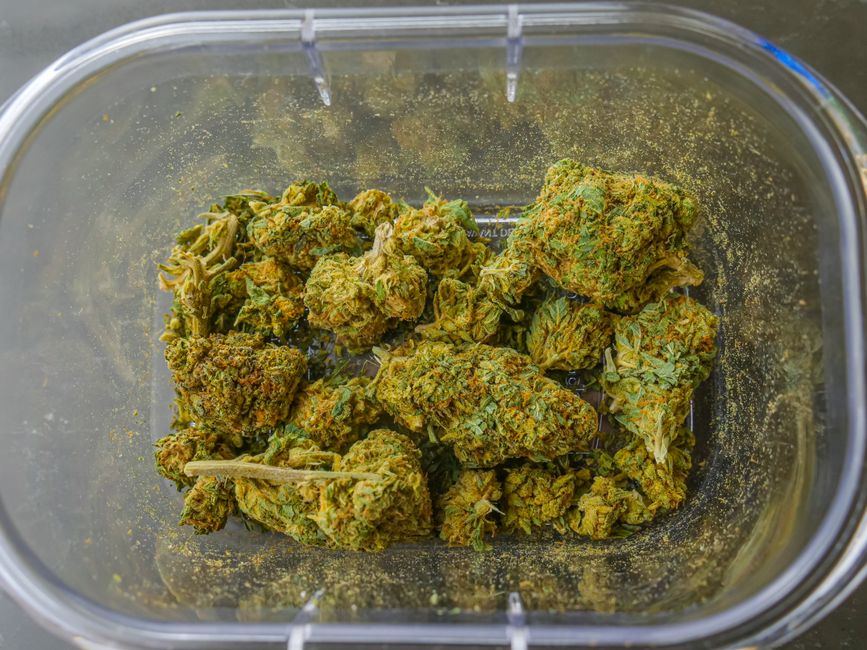
Businesses should not assume that dividing a product into several servings will solve the issue. The statutory wording refers to a container, and the way “container” applies to a specific product may depend on the product format and implementation guidance. A multi-serving package, a bottle, a pouch, and a sealed flower package may raise different practical questions, but the amount in the package cannot be ignored.
Compliance question Why it matters What is the total THC, including relevant THCA? A delta-9-only result may not show the full THC-related content. How much is present per container? The 0.4 mg cap is an amount per container, not merely a percentage. How was the cannabinoid produced? The amended definition addresses certain cannabinoids made outside the plant. What does the product’s lab report actually cover? Test method, analytes, sample identity, and date affect whether results support a compliance claim.Why flower shipments are at the highest risk
Flower shipments are among the products most exposed to the change because raw hemp flower can contain THCA even when its delta-9 THC result appears low. If the relevant compliance assessment counts total THC, a delta-9-only certificate may not be enough to establish that the shipment meets the new standard.
There is also a practical packaging issue. Flower is commonly shipped in sealed bags or jars that function as consumer-facing containers. If the applicable cap is measured per container, the amount in the package—not just the percentage shown on a batch report—needs careful review. A shipment can also face scrutiny at several points: cultivation, processing, interstate transport, warehousing, and retail.
That does not mean every flower shipment will automatically be unlawful on the effective date. It means businesses should treat flower as a priority for legal review and testing, and should not assume that a legacy certificate based on the old delta-9 standard will answer every question under the amended definition.
What should growers, brands, and retailers do now?
The USDA (US Department of Agriculture) has a central role in federal hemp production oversight, including the framework for licensed cultivation. The new product-definition provisions also raise questions that extend beyond farm licensing, including product composition, processing, packaging, and sale. Companies should identify which agency rules apply to each part of their operation and avoid assuming that a USDA cultivation document alone establishes retail-product compliance.
Industry groups such as the US Hemp Roundtable can help businesses follow legislative and regulatory developments, but membership in an association or reliance on an industry summary is not a substitute for product-specific review. Brands—including companies such as Joy Organics—need clear, documented compliance processes for the products they make or sell. Naming a company here is not an endorsement or a claim about its compliance status.
Practical steps include:
- Inventory every product and format. List flower, extracts, ingestibles, beverages, topicals, and any other cannabinoid products separately.
- Review formulas and sourcing. Record cannabinoid content, ingredient sources, manufacturing steps, and whether any cannabinoids are synthesized or produced outside the plant.
- Commission appropriate testing. Use third-party lab testing that measures the analytes relevant to the new standard, including THCA where applicable, and confirm that the method and reporting units fit the legal question.
- Match results to the actual package. Confirm the batch, product, serving configuration, and container size represented by the report. Do not use a result from one formulation to support a different one.
- Post batch lab results online. Batch lab results posted online can help customers and business partners verify what was tested. The report should be current, identifiable, and traceable to the product and lot being sold.
- Recheck labels and shipping documents. Ensure product descriptions, certificates, invoices, and transport paperwork do not rely only on a delta-9 percentage where total THC or per-container content is relevant.
- Get advice for specific products and destinations. Federal requirements are only part of the picture; state laws, carrier rules, and destination-specific restrictions may also apply.
What lab testing can—and cannot—prove
Third-party lab testing is useful only when the test answers the question the law asks. A report that measures delta-9 THC alone may not establish total THC. A report showing a concentration may not state the total milligrams in the container. And a report for a sample does not automatically prove that every unit in a shipment has the same composition.
Ask the laboratory what analytes it tested, what method it used, whether THCA is reported, how results are expressed, and how the tested sample is tied to the production batch. Keep the full certificate of analysis, not just a QR code or a summary graphic. Publicly posting batch lab results is a transparency measure, but it does not independently guarantee that a product meets every federal or state requirement.
Common mistakes to avoid
- Calling flower “THC-free” based only on a delta-9 result. Without relevant testing, that claim can conceal THCA or other THC-related content.
- Confusing concentration with total amount. A percentage by weight and milligrams per container are different measurements.
- Assuming the 2018 standard answers the new question. A product’s earlier status under a delta-9 threshold may not settle its status under Section 781.
- Treating December 11 as confirmed federal law. Verify the date against the statute or an official notice before changing production or shipping plans.
- Assuming a lab report is a legal opinion. Testing provides analytical data; businesses still need to interpret the law and maintain the required records.
Bottom line
The central issue is not simply a new number. Section 781 of Public Law 119-37 changes the federal hemp definition in ways that bring total THC, including THCA, product composition, and a 0.4 mg per-container cap into sharper focus. Flower shipments deserve particular attention because delta-9-only testing can miss the THCA that matters to a total-THC assessment.
For the date, verify before acting: the law’s scheduled effective date is November 12, 2026, based on its 365-day provision—not December 11, 2026. In the meantime, businesses can reduce avoidable risk by reviewing formulations and packaging, arranging suitable third-party lab testing, maintaining us hemp roundtable estimate complete batch records, and making batch lab results posted online easy to match to the product in the customer’s hand.